Partial solar eclipse of July 22, 2047
Key facts
- Date
- July 22, 2047
- Type
- Partial eclipse
- Duration of the annular phase at the point of greatest eclipse.
- —
- Maximum obscuration
- 24.4%
- Global eclipse maximum
- at 22:35 UTC UTC (Coordinated Universal Time): the worldwide time standard, independent of local time zones and daylight saving time.
- Coordinates of greatest eclipse
- 63.8° S – 160.0° E
- Path width at maximum
- —
- Saros series Number of the Saros series to which the eclipse belongs: similar eclipses recur about every 18 years and 11 days, with a comparable type and path, though not over the same locations each time.
- 156
- Regions
- Australia, Norfolk Island, New Caledonia and Tonga
- Example locations
- —
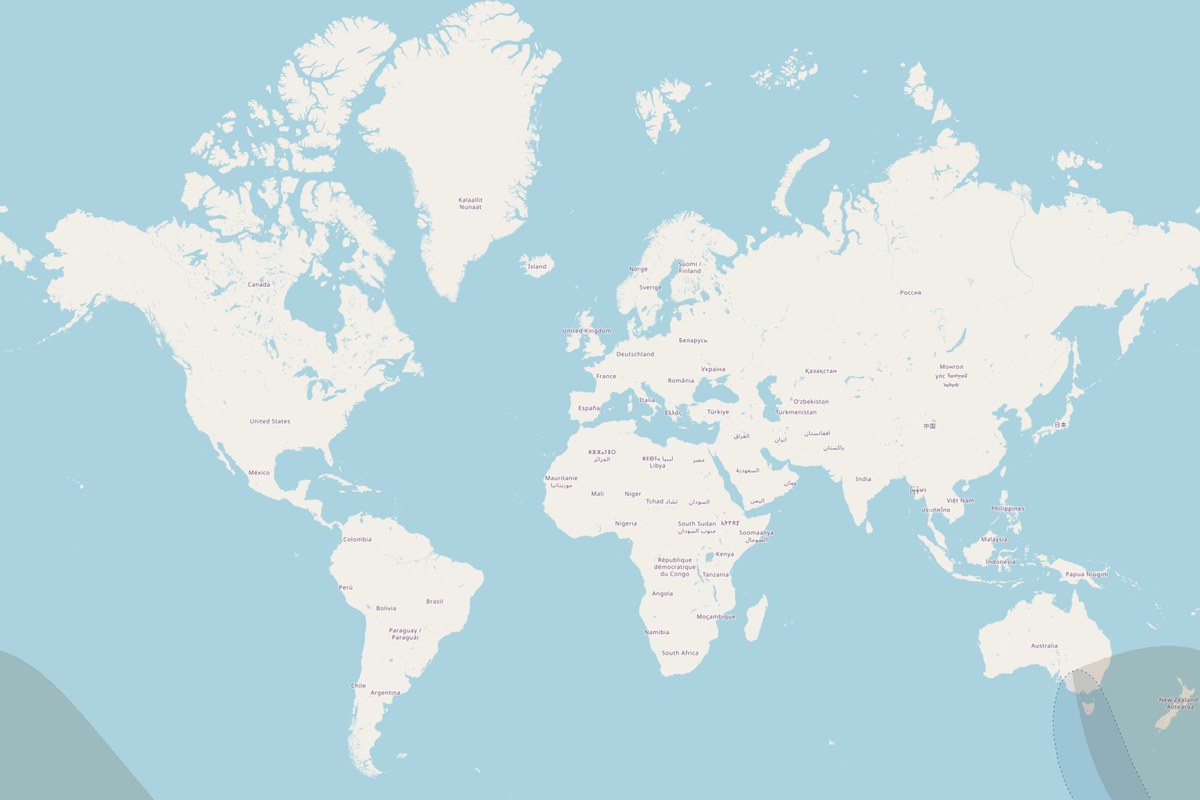
Choose a location anywhere on Earth to see if the eclipse will be visible, check local times, and watch it unfold in an animation.
Explore the eclipsePartial solar eclipse with partial obscuration over Australia, Norfolk Island, New Caledonia and Tonga.